China’s Envisioned Invasion Of Taiwan Would Generate A Global Semiconductor Crises
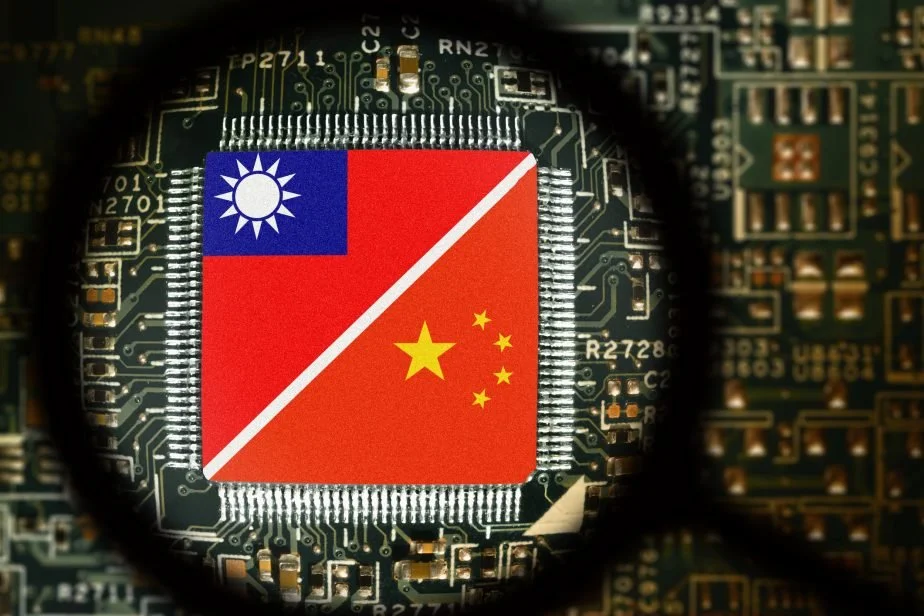
Credit: ID 292247798 © Tomasragina | Dreamstime.com
Introduction
For decades, Taiwan has represented one of the most dangerous flashpoints in international politics. Traditionally viewed through the lens of sovereignty, military confrontation and the growing rivalry between the United States and China, Taiwan is increasingly becoming something far more consequential: a global technological chokepoint.
Unlike previous geopolitical crises centred upon oil or territorial expansion, Taiwan occupies a unique position in the international system due to its dominance in semiconductor production. In an era increasingly dependent on artificial intelligence, cyber capabilities, advanced weaponry and digital infrastructure, control over semiconductors may prove as strategically important in the twenty-first century as oil was in the twentieth.
China has long maintained that Taiwan is an inseparable part of Chinese territory and has repeatedly declared its intention to achieve reunification, by force if necessary. Yet the geopolitical environment surrounding Taiwan appears increasingly complex. While Taiwan remained a sensitive issue during recent diplomatic engagement between Washington and Beijing, broader global instability involving the Russia–Ukraine war, escalating tensions involving Iran, and wider pressures on American military resources may lead some in Beijing to perceive strategic opportunity. This raises an important question: could China conclude that now represents the most favourable moment to pursue its long-held ambition to reclaim Taiwan?
Such a move would create consequences extending far beyond East Asia. Taiwan is currently the world’s leading producer of advanced semiconductor chips, the critical components underpinning modern technology. Any disruption to Taiwanese production through invasion, blockade or military instability would likely trigger severe economic, technological and geopolitical repercussions across the globe. This article argues that a Chinese move on Taiwan would create one of the most serious global chokepoints of the modern era, potentially reshaping the balance of economic and strategic power.
Taiwan: The Technological Heart of the Global Economy
Semiconductors are often described as the ‘brains’ behind modern technology. They are embedded within virtually every aspect of daily life, from smartphones, computers and electric vehicles to advanced weapons systems, satellite technology, financial networks and healthcare equipment. Without semiconductors, the digital economy ceases to function.
Taiwan’s importance within this ecosystem cannot be overstated. The island is home to the Taiwan Semiconductor Manufacturing Company (TSMC), the world’s dominant semiconductor manufacturer. Taiwan currently produces approximately 60 per cent of global semiconductor foundry output and more than 90 per cent of the world’s most advanced chips, particularly those below ten nanometres in size (Miller, 2022). These highly sophisticated chips are indispensable for artificial intelligence, military technologies and advanced computing.
Taiwan’s rise to semiconductor dominance reflects decades of strategic investment, engineering expertise and industrial specialisation. Yet Taiwan’s strength also represents a vulnerability for the international system. Unlike commodities such as oil, semiconductor production cannot easily be replaced. Manufacturing advanced chips requires highly specialised factories, known as fabrication plants or ‘fabs’, operating in tightly controlled environments with uninterrupted electricity, ultrapure water systems and advanced machinery costing billions of dollars (Fuller, 2022).
The COVID-19 pandemic briefly exposed this fragility. Relatively minor disruptions in chip production contributed to global shortages, forcing automobile manufacturers to halt production and delaying electronics worldwide. Yet these shortages occurred without military conflict. A Chinese military operation involving Taiwan would almost certainly create consequences on a vastly greater scale.
Why Taiwan Matters to China
China’s position on Taiwan extends beyond territorial ambition. Under President Xi Jinping, Beijing has increasingly framed reunification as a national imperative closely linked to China’s historical identity and political legitimacy. Chinese leaders frequently refer to Taiwan as unfinished business stemming from the Chinese Civil War and a necessary component of national rejuvenation (Bush, 2021).
From a realist perspective, Taiwan holds immense strategic value. As John Mearsheimer argues, great powers naturally seek regional dominance while limiting rival influence near their borders (Mearsheimer, 2001). Taiwan’s geographical position makes it central to Indo-Pacific power politics. The island sits within the strategically important First Island Chain, stretching from Japan through Taiwan and into Southeast Asia. Chinese control over Taiwan would significantly expand Beijing’s ability to project military power into the Pacific while weakening American strategic positioning in Asia (Kaplan, 2010).
Equally important is Taiwan’s technological significance. Control over the world’s leading semiconductor hub would provide Beijing with extraordinary geopolitical leverage. At present, American technological leadership rests not only upon innovation but also reliable access to advanced semiconductor production. Should China gain influence over Taiwan’s semiconductor industry, the balance of global technological power could fundamentally shift.
Constructivist scholars, however, offer an alternative explanation. Rather than focusing solely upon material calculations of power, constructivists argue that state behaviour is shaped by historical narratives, identity and social meaning (Wendt, 1999). China’s commitment to reunification therefore reflects not only strategic advantage but also deeply embedded beliefs concerning sovereignty, national unity and historical grievance.
The Global Semiconductor Chokepoint
The Strait of Hormuz has long represented one of the world’s most dangerous chokepoints because of its importance to global oil markets. Roughly one-fifth of global petroleum consumption passes through the narrow maritime corridor, meaning any disruption immediately affects energy prices and economic stability. Taiwan represents something comparable, though arguably more significant for the modern age: a semiconductor chokepoint.
Unlike oil, semiconductor production cannot simply be redirected elsewhere. If China invaded Taiwan or imposed a naval blockade, semiconductor production would likely halt immediately. Even temporary disruption could trigger cascading consequences throughout global supply chains.
Modern semiconductor fabs are extraordinarily vulnerable during military instability. Production requires stable infrastructure, uninterrupted logistics and precise environmental controls. Missile strikes, cyberattacks, blockades or workforce disruption could quickly halt operations. Moreover, many analysts suggest Taiwan itself may deliberately disable production facilities rather than allow advanced technology to fall under Chinese control, a strategy sometimes referred to as the ‘silicon shield’ (Miller, 2022).
The repercussions would spread rapidly.
The automotive industry would likely face immediate paralysis. Modern vehicles rely upon hundreds of semiconductor chips controlling everything from braking systems to navigation and engine performance. During the pandemic, limited shortages disrupted global manufacturing; a Taiwan crisis could bring production to a near standstill. Consumer technology would also suffer. Smartphones, laptops, cloud computing networks and telecommunications systems all depend heavily upon Taiwanese semiconductors. Prices would likely surge while availability declined sharply.
Artificial intelligence development could slow dramatically. Advanced AI systems require highly sophisticated graphics processing units and semiconductors largely dependent upon Taiwanese production. In a world increasingly defined by competition over AI supremacy, interruptions could reshape global technological competition. Military consequences may prove equally severe. Fighter aircraft, missile systems, cyber operations, satellites and intelligence infrastructure all rely upon advanced semiconductors. Any prolonged shortage could weaken defence readiness across multiple Western states, particularly the United States and Europe (U.S. Department of Defense, 2022).
Check or Checkmate?
The central geopolitical question is whether Chinese control over Taiwan would amount to strategic ‘check’ or ‘checkmate’.
At first glance, the answer appears obvious. If China controlled the manufacturing backbone of advanced semiconductors while the United States remained dependent upon them, Beijing would possess extraordinary leverage over the technologies underpinning modern economies and militaries.
America may continue leading in technological innovation, software development and chip design, but control over production matters enormously. Technological leadership means little if access to manufacturing becomes vulnerable to geopolitical coercion.
Yet the reality is more complicated.
Taiwan’s semiconductor ecosystem does not exist independently. Advanced chips rely upon American design firms, Dutch lithography systems manufactured by ASML, Japanese chemicals and globally integrated supply chains (Fuller, 2022). China could potentially control territory, but replicating the ecosystem sustaining advanced chip manufacturing would remain exceptionally difficult. This suggests that Chinese control over Taiwan may not represent immediate checkmate, but it would unquestionably alter the strategic balance in Beijing’s favour. The psychological impact alone could reshape global markets, alliances and political calculations.
Global Economic Consequences
The economic consequences of conflict over Taiwan would likely be devastating. Bloomberg Economics estimates that a war involving Taiwan could cost the global economy approximately $10 trillion, representing around 10 per cent of global GDP (Bloomberg Economics, 2024). Financial markets would react sharply to instability. Stock markets would likely decline significantly, investor confidence could weaken, and global trade disruptions would intensify inflationary pressures.
Critical industries including automotive manufacturing, healthcare technology, communications, cybersecurity and energy infrastructure would face severe disruption. Supply chains already weakened by recent global crises may struggle to adapt. The result could resemble a combination of the COVID pandemic, the global financial crisis and an energy shock occurring simultaneously.
Conclusion
Taiwan can no longer be understood merely as a territorial dispute between China and a self-governing island. It has become one of the world’s most dangerous technological chokepoints, central to economic prosperity, military capability and global technological leadership.
A Chinese move against Taiwan would not simply create regional instability; it could trigger a profound semiconductor crisis capable of disrupting nearly every major economy. The implications extend far beyond military confrontation, reaching into artificial intelligence, cybersecurity, defence systems, healthcare, communications and critical infrastructure.
In many respects, Taiwan has become the Strait of Hormuz of the digital age. Yet while oil shortages can be mitigated through alternative suppliers and reserves, semiconductors remain exceptionally difficult to replace. This makes Taiwan uniquely vulnerable and uniquely important.
The real question may no longer be whether China wants Taiwan. Rather, it is whether the international system is prepared for the consequences should Beijing decide that the strategic moment to act has finally arrived.
References
Bloomberg Economics (2024) The Economic Cost of a Taiwan Crisis. Bloomberg.
Bush, R.C. (2021) Difficult Choices: Taiwan’s Quest for Security and the Good Life. Washington DC: Brookings Institution Press.
Fuller, D.B. (2022) Paper Tigers, Hidden Dragons: Firms and the Political Economy of China’s Technological Development. Oxford: Oxford University Press.
Kaplan, R.D. (2010) Monsoon: The Indian Ocean and the Future of American Power. New York: Random House.
Mearsheimer, J.J. (2001) The Tragedy of Great Power Politics. New York: W.W. Norton.
Miller, C. (2022) Chip War: The Fight for the World’s Most Critical Technology. New York: Scribner.
U.S. Department of Defense (2022) National Defense Strategy of the United States. Washington DC: Department of Defense.
Wendt, A. (1999) Social Theory of International Politics. Cambridge: Cambridge University Press.