Rama Duwaji and the Luxury of Radicalism: When Political Violence Becomes Personal
There is a particular privilege in romanticizing political violence from a position of safety.
From New York, terrorism can be redescribed as resistance. Murder can be absorbed into the language of liberation. Atrocities can be questioned, minimized or subordinated to a political narrative in which the perceived righteousness of a cause becomes more important than the methods employed in pursuing it. Political violence looks rather different, however, when the possibility of becoming its victim is no longer theoretical.
That contradiction deserves examination in the case of Rama Duwaji, wife of New York City Mayor Zohran Mamdani. Duwaji's political activism and social-media history concerning Israel and Palestine have attracted considerable scrutiny, particularly following reports concerning material she shared or endorsed relating to Palestinian militancy and the October 7, 2023 Hamas attack on Israel (Izaguirre, 2026).
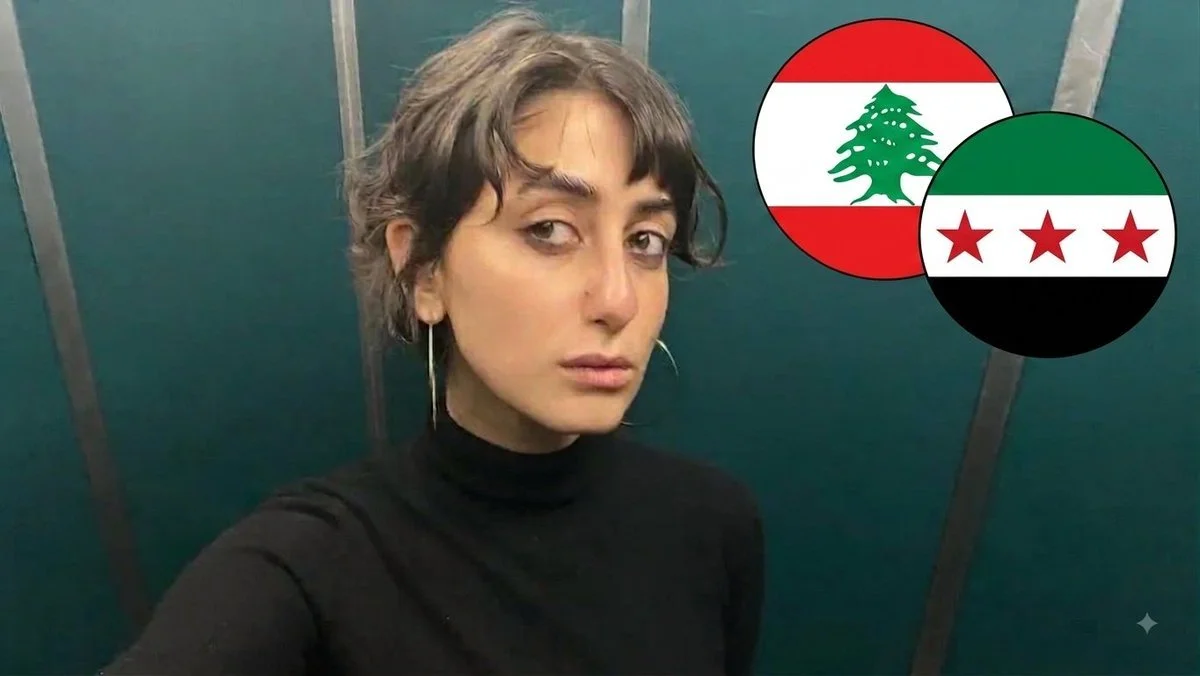
The issue has acquired new significance because Duwaji reportedly intends to travel to Syria and Lebanon in September 2026, two countries that the U.S. Department of State currently classifies at Level 4: Do Not Travel because of serious security threats, including terrorism and kidnapping (U.S. Department of State, 2025, 2026).
The contrast is difficult to ignore.
The question is not whether Duwaji deserves personal security. The more difficult question is whether there is an intellectual and moral contradiction between appearing willing to romanticize or minimize political violence when directed at others while recognizing its seriousness when entering an environment in which the danger might become personal.
The Posts Matter
Duwaji's record on Israel cannot be dismissed as legitimate political criticism alone. At times, it has crossed into morally indefensible territory, particularly where her social-media activity has appeared to celebrate, excuse or minimize political violence against Israeli civilians.
Criticism of an Israeli government is legitimate. Advocacy for Palestinian statehood is legitimate. Condemnation of civilian suffering in Gaza is legitimate. But none of those positions requires the romanticization of terrorism, the glorification of individuals associated with attacks on civilians, or the minimization of atrocities committed against Israelis.
Associated Press reporting in April 2026 described resurfaced social-media material from Duwaji that included posts concerning Palestinian militants associated with aircraft hijackings and bombings. Duwaji subsequently apologized for what she described as "harmful" posts she had made as a teenager, acknowledging that her age at the time did not excuse them (Izaguirre, 2026).
More importantly, however, the controversy has not been confined to statements made during adolescence. Reporting by the New York Jewish Week documented more recent social-media activity involving Duwaji's likes of posts concerning October 7 and Palestinian "resistance." The publication noted that her 2026 apology for her teenage posts did not address those more recent actions (New York Jewish Week, 2026).
That distinction is critical.
An apology for offensive statements made as a teenager cannot reasonably be treated as an apology for political positions subsequently expressed or endorsed as an adult. Nor should more recent conduct be excused merely because it occurred within the broader context of opposition to Israeli policy. The moral question is not whether Duwaji is entitled to criticize Israel. She unquestionably is. The question is what she has appeared willing to excuse in the course of doing so.
October 7 involved the deliberate killing and kidnapping of civilians. Describing or endorsing rhetoric portraying such violence as ‘resistance’ or ‘liberation’ does not constitute ordinary criticism of Israeli government policy. It risks transforming the suffering of civilians into an acceptable instrument of political struggle.
That is where Duwaji's record becomes morally indefensible.
Political morality cannot operate according to the identity of the victim. Israeli civilians do not lose their right to moral consideration because someone believes their government has oppressed Palestinians, just as Palestinian civilians do not lose theirs because Hamas committed atrocities.
The same standard must apply to both.
When political allegiance determines whose suffering is condemned and whose suffering is rationalized, the principle being defended is no longer universal human rights. It is selective morality. And it is precisely this selective morality that makes Duwaji's proposed journey to Syria and Lebanon so politically revealing.
Radicalism From a Safe Distance
There is something particularly troubling about revolutionary politics practiced from the security of Western democratic society.
People living in New York can celebrate ‘resistance’ without experiencing the everyday consequences of societies in which armed organizations, terrorism, political kidnapping and civil conflict remain genuine security concerns.
The revolutionary vocabulary is easier to embrace when somebody else normally bears its consequences. That is why Duwaji's proposed journey is politically revealing.
The U.S. government currently advises Americans not to travel to Syria for any reason, citing terrorism, civil unrest, kidnapping, hostage-taking, crime and armed conflict. The United States has had no functioning embassy in Syria since suspending operations in 2012, severely restricting its ability to provide assistance to Americans who encounter difficulties there (U.S. Department of State, 2025).
Lebanon carries the same Level 4 designation. The State Department warns of crime, terrorism, unrest, kidnapping, landmines and armed conflict. The security situation became sufficiently serious that in February 2026 the United States ordered non-emergency government employees and their family members to leave the country (U.S. Department of State, 2026).
These warnings describe the reality hidden behind the romantic vocabulary of militant politics.
There is nothing romantic about kidnapping.
There is nothing emancipatory about hostage-taking.
And terrorism ceases to be an ideological abstraction when one becomes a potential target.
The Security Controversy
The contradiction became more striking when questions arose concerning security for Duwaji's proposed journey.
Initial reporting indicated that Duwaji was expected to receive an NYPD security detail during the trip and that City Hall claimed the department had strongly recommended the arrangement. The NYPD subsequently contradicted that account, stating that officers are not normally deployed on discretionary personal trips to Level 4 countries (New York Post, 2026a). Mayor Mamdani subsequently attributed the episode to a ‘miscommunication’ and confirmed that Duwaji would travel without an NYPD detail (New York Post, 2026b).
This correction is important. It would be inaccurate to claim that Duwaji is presently taking taxpayer-funded NYPD officers to Syria or Lebanon. According to the latest reporting, she is not. But the controversy nevertheless exposes something worth examining.
Why did security become such an important consideration in the first place?
Because terrorism is dangerous.
Because kidnapping is dangerous.
Because political instability is dangerous.
Because armed ideological movements cannot necessarily be relied upon to distinguish between individuals according to their political sympathies.
All of this seems self-evident when considering personal security. The same moral clarity should apply when the potential victims are Israeli civilians.
When Does Terrorism Count?
This leads to the central question raised by Duwaji's political record.
When does political violence become unacceptable: when Israelis are murdered, when Americans are threatened, or only when violence shifts from ideological solidarity to personal vulnerability? Human rights cannot operate according to political preference.
If deliberately attacking civilians is wrong, it remains wrong regardless of whether the perpetrator is a state, terrorist organization, militia or revolutionary movement.
If kidnapping civilians is wrong, the nationality of the hostage is irrelevant.
If sexual violence is abhorrent, allegations of it cannot simply be discarded because acknowledging them complicates a preferred political narrative.
The danger begins when the political identity of the perpetrator determines whether the victim receives sympathy.
The Comfortable Language of ‘Resistance’
The word resistance has become one of the most politically powerful, and potentially misleading, terms in contemporary discussions of conflict.
Resistance can mean peaceful political opposition. It can mean civil disobedience. It can mean armed struggle against military forces. But the word itself cannot transform deliberate violence against civilians into something morally admirable.
Language cannot launder atrocities.
Throughout history, organizations employing political violence have attempted to portray their actions as necessary responses to oppression. Once individuals cease to be viewed as civilians and instead become representatives of an allegedly oppressive political system, violence against them becomes easier to rationalize.
This is why rhetoric surrounding October 7 matters.
Calling violence against civilians an expression of liberation changes the moral focus of the event. Attention moves away from what happened to individual human beings and toward what the violence supposedly represented politically. The cause becomes larger than the victim. That is a dangerous moral calculation regardless of who makes it.
Sympathy Does Not Provide Immunity
Duwaji's proposed journey also illustrates another uncomfortable reality.
Political sympathy provides no guarantee of personal security. A terrorist organization does not necessarily care that a visitor has criticized Israel. A kidnapper does not necessarily investigate someone's Instagram history before deciding whether that person possesses value as a hostage. Political violence has its own momentum. Once violence becomes an acceptable instrument for resolving political grievances, those who legitimize it have little ability to determine where the moral boundary will eventually be drawn.
This is precisely why the principle of civilian immunity matters. It protects everyone.
The Privilege of Western Radicalism
Duwaji's story consequently represents something larger than the political opinions of one individual.
It illustrates a broader privilege within Western political activism: the ability to romanticize revolutionary struggle while remaining largely insulated from its consequences. From New York, militancy can become political imagery.
Posters, slogans, social-media posts and artwork can transform distant conflicts into expressions of personal political identity. But civilians living amid conflict do not experience political violence aesthetically.
They bury people.
They flee their homes.
They search for missing relatives.
They worry about rockets, bombs, gunmen, kidnappings and armed groups.
They experience physically what distant political activists can discuss theoretically.
There is an enormous difference between the two.
The Double Standard
The most serious criticism of Duwaji is therefore not that she wishes to remain safe. Of course she does.
The criticism concerns whether the instinctive recognition of one's own vulnerability produces an equivalent recognition of the vulnerability of people on the opposite side of a political conflict.
If kidnapping represents a legitimate concern for someone traveling through Syria or Lebanon, kidnapping was also an act of terror for Israeli civilians taken hostage on October 7.
If terrorism justifies serious precautions when Americans may encounter it abroad, terrorism cannot simultaneously become an admirable expression of resistance when civilians elsewhere encounter it.
If personal security matters to us, it must matter to them.
That is where the charge of political inconsistency becomes difficult to dismiss. And invoking Palestinian suffering does not resolve the contradiction. Palestinian suffering is real. Palestinian civilians possess precisely the same human dignity as Israeli civilians. Condemning Hamas does not require indifference toward Palestinian deaths, just as condemning Israeli military conduct does not require minimizing the murder or kidnapping of Israelis.
Indeed, that is precisely the point.
There must be one standard.
Not one standard for Palestinians and another for Israelis.
Not one standard for political allies and another for political opponents.
And certainly not one standard for political violence contemplated from the security of New York and another when the possibility of violence becomes personal.
When Ideology Meets Reality
Rama Duwaji has every right to express her political opinions.
But public political expression also carries the possibility of public scrutiny.
When political rhetoric appears to transform attacks on civilians into liberation or resistance, people are entitled to ask where are the moral boundary lines.
Duwaji's proposed journey into two countries that her own government considers sufficiently dangerous to warrant its strongest possible travel warning makes that question particularly timely. Perhaps political violence appears different when viewed not through social media but through a security assessment. That does not mean Duwaji deserves danger. It means that the civilians whose suffering has been minimized or politically rationalized did not deserve it either.
That is the uncomfortable lesson.
It is easy to romanticize political violence when somebody else is expected to absorb its consequences.
It is easy to speak of resistance when somebody else's child is hiding from gunmen.
It is easy to speak of liberation when somebody else's relative has been taken hostage.
It is considerably more difficult when the dangers associated with political violence become personal.
The measure of serious political morality is not whether we recognize injustice committed against people with whom we sympathize. Almost everyone can do that. The genuine test is whether we recognize the humanity of people whom our politics has taught us to regard as adversaries.
If terrorism is wrong, it remains wrong regardless of its target. If civilians possess rights, those rights cannot depend upon nationality. And if personal security is valuable enough to matter when our own safety is potentially at stake, the security of people with whom we profoundly disagree must possess exactly the same value.
That is the question Rama Duwaji's record leaves hanging.
The harder question is why the moral imperative of protecting civilians can appear so much clearer when the potential danger moves closer to home.
References
Izaguirre, A. (2026, April 16). Zohran Mamdani's wife Rama Duwaji apologizes for the 'harmful' social media posts she made as a teen. Associated Press.
New York Jewish Week. (2026, April 16). Rama Duwaji apologizes for old posts, but not for likes praising Oct. 7 'resistance'. Jewish Telegraphic Agency.
New York Post. (2026a, August 11). Confusion as NYPD denies City Hall claim Mamdani's wife Rama Duwaji will get police escort on Syria, Lebanon trip.
New York Post. (2026b, August 11). Red-faced Mamdani blames his staff after NYPD denies NYC's first lady Rama Duwaji a police escort to the Middle East.
U.S. Department of State. (2025, December 11). Syria travel advisory. Bureau of Consular Affairs.
U.S. Department of State. (2026, May 6). Lebanon travel advisory. Bureau of Consular Affairs.