Britain's Immigration Crisis and the Growing Public Anger
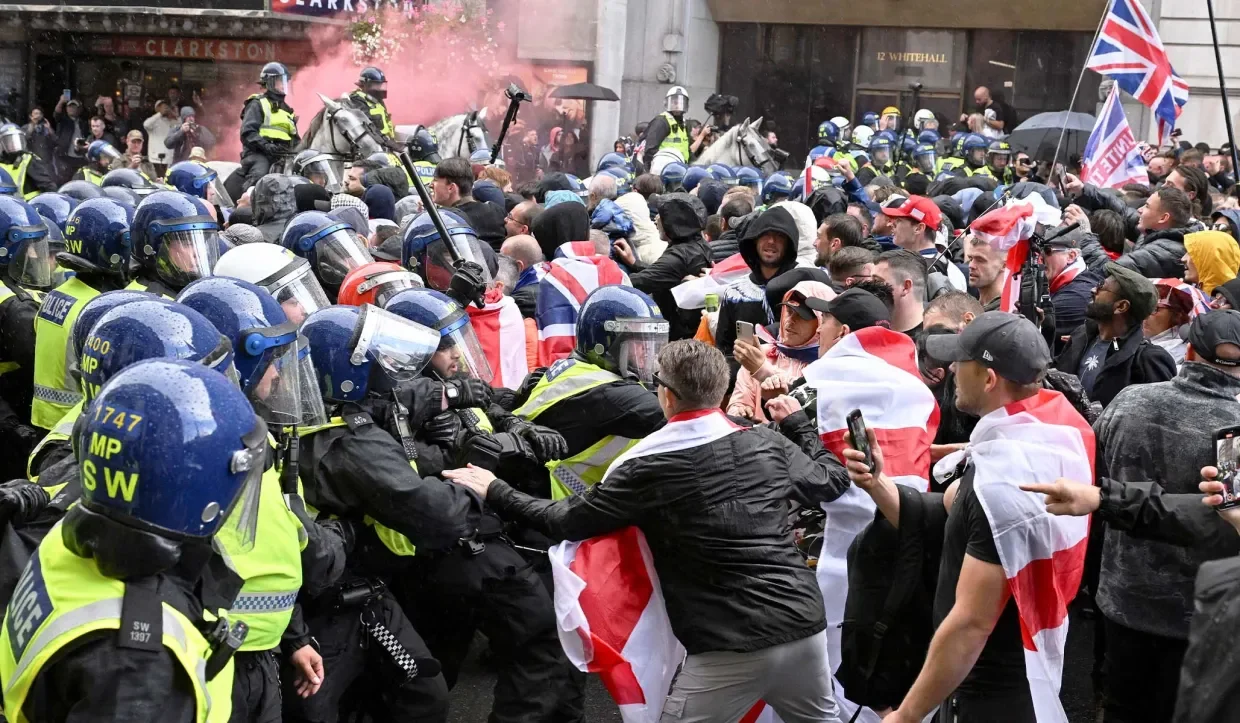
Image Credit: Chris J. Ratcliffe/Reuters
Immigration has become one of the defining political issues in Britain. For more than a decade, successive governments have promised stronger border controls, reduced illegal migration and a more effective asylum system. Yet despite repeated pledges, illegal crossings of the English Channel continue, asylum backlogs remain substantial, and public dissatisfaction with immigration policy has reached some of the highest levels recorded. The result is a growing belief among many Britons that government policy no longer reflects public demand.
At the centre of the debate lies a simple question: if a democratic government repeatedly promises to control illegal immigration but fails to do so, how long before public confidence begins to erode?
The concern extends beyond migration statistics. For many citizens, immigration has become a symbol of broader governmental failure. Every small-boat crossing broadcast on television, every report of an unsuccessful deportation, and every high-profile crime committed by an individual who had no legal right to remain in the country reinforces the perception that the state is losing control of its borders. Whether that perception is entirely accurate is almost secondary to the fact that it is increasingly shaping political attitudes and voting behaviour.
Public opinion polling demonstrates the scale of this concern. Research conducted by YouGov consistently finds that a substantial majority of Britons believe immigration levels have been too high over the past decade (YouGov, 2025). Similarly, Ipsos reports that dissatisfaction with government handling of immigration has reached historically high levels, with nearly seven in ten respondents expressing dissatisfaction with current policy (Ipsos, 2024). Similar concerns are evident across Europe. Analysis of the European Social Survey found that immigration remains a major source of public concern in many European states, particularly where citizens perceive governments to have lost control of migration flows (Rockwool Foundation, 2025).
What makes these findings particularly significant is that concern extends well beyond traditional political divisions. Public frustration is not confined to one political party, social class or region. Rather, it reflects a growing perception that political leaders have become disconnected from the electorate on an issue many voters regard as fundamental to national sovereignty, public security and democratic accountability. This growing disconnect raises broader questions regarding democratic legitimacy. Norris (2011) argues that democratic institutions depend upon maintaining public confidence that governments remain responsive to citizen concerns. When large sections of the electorate perceive that their views are repeatedly ignored, trust in those institutions may gradually weaken.
The rise in irregular migration has intensified these concerns. According to Home Office statistics, tens of thousands of migrants have crossed the English Channel in small boats in recent years, placing increasing strain on an asylum system already burdened by significant backlogs (Home Office, 2025). At the same time, Office for National Statistics data shows migration remains one of the principal drivers of population growth within the United Kingdom, further increasing political attention on housing, infrastructure and public services (ONS, 2025). While Britain remains bound by international obligations towards refugees and asylum seekers, many citizens increasingly question whether existing legal frameworks are being exploited by individuals seeking economic opportunities rather than protection from persecution.
The result has been growing scepticism regarding the government's ability to enforce immigration law. Reports from the House of Commons Library have repeatedly highlighted challenges associated with asylum processing, accommodation costs, appeals procedures and removals (House of Commons Library, 2025). Critics argue that lengthy legal processes and administrative inefficiencies have created a system that struggles to distinguish quickly between genuine refugees and those without a valid claim.
Public anger has been further fuelled by a series of high-profile criminal cases involving migrants and asylum seekers. Serious offences such as rape, sexual assault, violent attacks and murder attract widespread attention because they raise legitimate questions regarding border security, vetting procedures and public safety. While such crimes represent only a small proportion of overall criminal activity, their political impact is often considerable. Each case reinforces a perception that failures in immigration enforcement can carry real-world consequences for ordinary citizens.
The importance of perception should not be underestimated. Hay (2007) argues that declining trust in government frequently emerges when citizens believe political institutions are either unwilling or unable to address their concerns. Immigration increasingly appears to fit this pattern. Polling repeatedly demonstrates public concern, yet many voters perceive little meaningful change in policy outcomes. This growing disconnect has contributed to declining confidence in mainstream political institutions.
The broader political consequences are already visible. Ford and Goodwin (2014) argue that concerns regarding immigration, national identity and cultural change have played a significant role in reshaping British politics over the past two decades. The Brexit referendum demonstrated how strongly questions of sovereignty and border control resonated with many voters. Research from the Migration Observatory found that while many Britons acknowledge the economic contribution of legal migration, a majority continue to favour lower overall immigration levels and stronger border controls, demonstrating the complexity of public attitudes towards migration policy (Migration Observatory, 2025).
Goodhart (2017) argues that many political disagreements surrounding immigration are rooted in a growing divide between those who identify strongly with place, community and national identity and those who embrace a more globally connected outlook. Immigration therefore becomes more than a policy issue; it becomes a reflection of competing visions of national identity and Britain's future direction.
Similarly, Kaufmann (2018) contends that concerns regarding immigration are often linked to questions of cultural continuity, identity and social cohesion rather than economic considerations alone. Such concerns have become increasingly influential in shaping political discourse across Europe and have helped fuel populist and anti-establishment movements.
More recently, Goodwin (2024) has argued that immigration continues to be one of the principal drivers of political realignment in Britain, influencing public attitudes towards political representation, national identity and trust in government. Immigration has therefore become not merely a question of policy but a test of whether political institutions remain responsive to public concerns.
North Belfast: A Catalyst Rather Than the Cause
Recent events in North Belfast illustrate how a single violent incident can ignite wider political and social tensions that have been building for years. The brutal knife attack on a local resident in June 2026 generated immediate public outrage due to the severity of the injuries inflicted and the subsequent revelation that the suspect was a Sudanese national who had previously been granted leave to remain in the United Kingdom (Reuters, 2026).
Reports indicated that the victim sustained life-changing injuries to his face, eyes, neck and back (Reuters, 2026). The attack itself was shocking, but its significance extended far beyond the criminal act. Many citizens viewed the incident not as an isolated event but as evidence of wider failures in immigration enforcement and asylum policy.
The unrest that followed was not simply driven by anger over one crime. Rather, the attack appeared to crystallize frustrations that had accumulated over many years. For a growing number of citizens, the issue is no longer solely about immigration numbers. It is about confidence in the state's ability to control its borders, vet those entering the country and remove individuals who may pose a threat to public safety (House of Commons Library, 2025).
Political leaders were correct to condemn violence and disorder. However, focusing exclusively on the unrest risks overlooking the deeper causes of public frustration. Many citizens believe that concerns regarding illegal immigration, border security and deportation policy have been repeatedly dismissed or ignored by political elites. The North Belfast attack therefore became a catalyst for wider anxieties already present within British society.
From a political perspective, perception matters almost as much as reality. Against a backdrop of record public concern regarding immigration (Ipsos, 2025; YouGov, 2025), incidents such as North Belfast become powerful symbols of broader policy failures in the public imagination. Whether these perceptions are entirely justified is ultimately less important than the fact that they are increasingly shaping political behaviour.
In this sense, North Belfast should not be viewed merely as a criminal case. It should be understood as a political event that exposed a widening gap between government policy and public sentiment. The attack did not create public anger; rather, it revealed the extent to which that anger had already accumulated beneath the surface of British politics.
Ultimately, Britain's immigration debate has become a test of democratic responsiveness. The issue is no longer whether immigration should exist, but whether government possesses both the ability and political will to manage it effectively. Until a significant proportion of the public believes that question has been answered, immigration is likely to remain one of the most powerful and divisive issues in British politics (Goodwin, 2024; Norris, 2011; YouGov, 2025).
References:
Ford, R. and Goodwin, M. (2014) Revolt on the Right: Explaining Support for the Radical Right in Britain. Abingdon: Routledge.
Goodhart, D. (2017) The Road to Somewhere: The Populist Revolt and the Future of Politics. London: Hurst.
Goodwin, M. (2024) Values, Voice and Virtue: The New British Politics. London: Penguin.
Hay, C. (2007) Why We Hate Politics. Cambridge: Polity Press.
Home Office (2025) Illegal entry routes to the UK summary tables, year ending December 2025. London: Home Office. Available at: https://www.gov.uk/government/statistical-data-sets/illegal-entry-routes-summary-previous-data-tables (Accessed: 9 June 2026).
House of Commons Library (2025) Asylum and refugee resettlement in the UK. London: UK Parliament. Available at: https://commonslibrary.parliament.uk/research-briefings/sn01403/ (Accessed: 9 June 2026).
Ipsos (2024) Immigration attitudes tracker: Dissatisfaction with government on immigration at highest level since 2015. London: Ipsos UK. Available at: https://www.ipsos.com/en-uk/immigration-tracker-march-2024 (Accessed: 8 June 2026).
Ipsos (2025) Public concern about immigration reaches highest level in a decade. London: Ipsos UK. Available at: https://www.ipsos.com/en-uk/public-concern-about-immigration-reaches-highest-level-decade (Accessed: 8 June 2026).
Kaufmann, E. (2018) Whiteshift: Populism, Immigration and the Future of White Majorities. London: Allen Lane.
Migration Observatory (2025) UK Public Opinion Toward Immigration: Overall Attitudes and Level of Concern. Oxford: University of Oxford. Available at: https://migrationobservatory.ox.ac.uk/resources/briefings/uk-public-opinion-toward-immigration-overall-attitudes-and-level-of-concern/ (Accessed: 8 June 2026).
Norris, P. (2011) Democratic Deficit: Critical Citizens Revisited. Cambridge: Cambridge University Press.
Office for National Statistics (2025) Long-term international migration, UK: Year ending June 2025. Newport: Office for National Statistics. Available at: https://www.ons.gov.uk/peoplepopulationandcommunity/populationandmigration/internationalmigration/bulletins/longterminternationalmigrationprovisional/yearendingjune2025 (Accessed: 9 June 2026).
Reuters (2026) Homes set alight in Belfast anti-immigrant protests after knife attack. Available at: https://www.reuters.com/world/uk/northern-ireland-police-arrest-man-over-barbaric-knife-attack-2026-06-09/ (Accessed: 10 June 2026).
Reuters (2026) Belfast's anti-migration violence brings back dark memories of the Troubles. Available at: https://www.reuters.com/world/uk/belfasts-anti-migration-violence-brings-back-dark-memories-troubles-2026-06-10/ (Accessed: 10 June 2026).
Rockwool Foundation (2025) Attitudes towards migration in Europe: Evidence from the European Social Survey. Berlin: Rockwool Foundation. Available at: https://www.rfberlin.com/attitudes-towards-migration-in-europe/ (Accessed: 8 June 2026).
YouGov (2025) Do Britons think immigration has been too high or too low in the last ten years? London: YouGov. Available at: https://yougov.com/en-gb/trackers/do-brits-think-that-immigration-has-been-too-high-or-low-in-the-last-10-years (Accessed: 8 June 2026).
YouGov (2025) EuroTrack: publics across Western Europe are unhappy with immigration. London: YouGov. Available at: https://yougov.com/en-gb/articles/51684-eurotrack-publics-across-western-europe-are-unhappy-with-immigration (Accessed: 8 June 2026).