Iran's Attack on Israel: Economic and Geopolitical Consequences
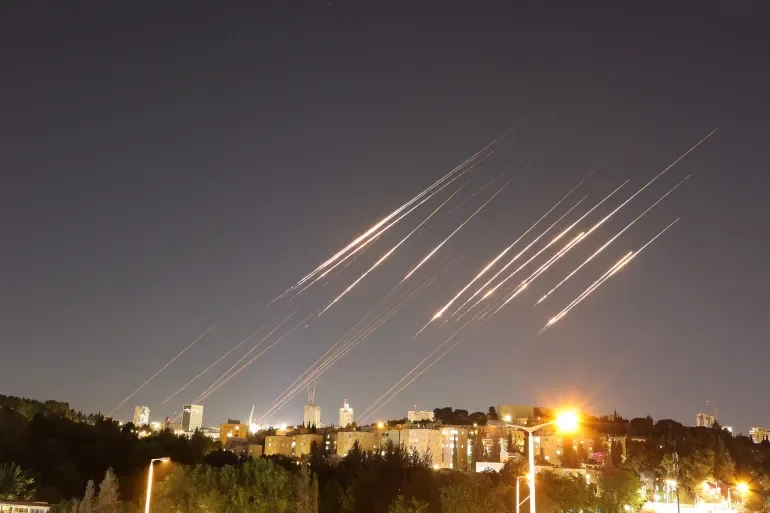
Image Credit: Abir Sultan/EPA-EFE
The latest Iranian missile attack against Israel serves as another reminder that modern warfare is no longer confined to the battlefield. While missiles, drones and air defence systems dominate media coverage, the true consequences of such confrontations often emerge far beyond the immediate combat zone. Markets react, energy prices fluctuate, supply chains become vulnerable and governments reassess their strategic calculations. The recent exchange between Iran and Israel illustrates how a regional conflict can quickly generate global economic repercussions and geopolitical instability.
Iran launched missiles against Israel following renewed hostilities involving Israeli operations in Lebanon and strikes targeting Iranian interests and allied groups in the region. Although Israeli air defence systems intercepted many of the incoming missiles, the significance of the attack extends beyond the physical damage inflicted. The strike represented a deliberate demonstration of Iran's willingness to challenge Israel directly and signal that it retains the capability to retaliate despite years of sanctions, economic pressure and military containment efforts (Axios, 2026). The attack also highlighted the increasingly fragile security environment of the Middle East, where a single escalation can affect global markets within hours. (Axios)
From an economic perspective, financial markets reacted immediately. Oil prices experienced renewed volatility as investors assessed the possibility of a wider regional conflict. Energy traders remain acutely aware that any confrontation involving Iran carries implications for the Strait of Hormuz, one of the world's most important maritime chokepoints. Approximately one-fifth of globally traded oil passes through this narrow waterway, making it a critical artery of international commerce. Even the perception of disruption can trigger significant increases in oil prices, insurance costs and transportation expenses (Reuters, 2026a). (Reuters)
The strategic importance of the Strait of Hormuz gives Iran a unique form of leverage. Unlike conventional military powers that rely solely on battlefield success, Tehran possesses the ability to impose economic costs on its adversaries through threats to maritime traffic and energy flows. Previous disruptions linked to the ongoing conflict have already contributed to rising energy prices and uncertainty throughout global markets. Although shipping activity has begun to recover, experts continue to warn that a return to normal conditions remains dependent upon a lasting reduction in hostilities (Reuters, 2026b). (Reuters)
The consequences extend far beyond the energy sector. Higher oil prices contribute directly to inflation, increasing transportation costs and raising the price of goods worldwide. Airlines, shipping companies and manufacturing industries are particularly vulnerable to sudden increases in fuel costs. Recent reports indicate that disruptions associated with the conflict have contributed to substantial increases in jet fuel prices, forcing airlines to reconsider routes, reduce capacity and revise profit forecasts. Such developments demonstrate how a missile exchange thousands of miles away can ultimately affect consumers across Europe, North America and Asia (New York Post, 2026). (New York Post)
Economic Shockwaves Beyond the Middle East
While immediate market reactions often focus on oil prices, the broader economic consequences of regional instability can be far more significant. The global economy remains heavily interconnected, meaning that disruptions originating in one region frequently generate ripple effects across multiple sectors and continents. The latest Iranian missile attack on Israel demonstrates how geopolitical instability can quickly translate into economic uncertainty.
Historically, conflicts in the Middle East have had disproportionate influence over global markets because of the region's importance to energy production. The 1973 Arab Oil Embargo remains one of the most prominent examples. In response to Western support for Israel during the Yom Kippur War, Arab oil-producing states imposed restrictions on exports, triggering a dramatic increase in oil prices and contributing to inflation, economic stagnation and recession throughout much of the Western world (Yergin, 2011). Although today's energy markets are more diversified, the fundamental vulnerability remains. Energy continues to underpin transportation, manufacturing, agriculture and global trade.
The current situation differs from 1973 in that Iran does not possess the same level of direct control over global oil production. However, Tehran does possess something arguably more valuable: geographic influence over the Strait of Hormuz. This narrow waterway links the Persian Gulf to the Gulf of Oman and the Arabian Sea. Approximately twenty percent of the world's oil trade and a significant proportion of liquefied natural gas exports transit through this corridor annually (U.S. Energy Information Administration, 2024). Any threat to freedom of navigation immediately captures the attention of governments, investors and multinational corporations.
Even when shipping continues uninterrupted, the mere possibility of disruption generates costs. Marine insurers increase premiums, shipping companies alter routes and investors seek safer assets. These costs are ultimately passed on to consumers through higher prices. What begins as a security issue therefore evolves into an economic issue affecting households thousands of miles from the conflict itself.
Another consequence often overlooked is the effect on supply chains. The COVID-19 pandemic exposed the fragility of global supply networks, revealing how disruptions in one region could impact production elsewhere. Similar vulnerabilities exist within energy-dependent industries today. Rising fuel costs affect the transportation of goods, increase production expenses and place additional pressure on already strained supply chains. Manufacturers, retailers and logistics companies are forced to absorb higher operating costs or transfer them to consumers.
The aviation sector provides a particularly clear example. Airlines operate on relatively narrow profit margins and are highly sensitive to fuel prices. During periods of geopolitical instability, carriers often face the dual challenge of higher fuel costs and altered flight routes designed to avoid conflict zones. Longer routes consume additional fuel, increase operating expenses and can reduce profitability. These factors eventually contribute to higher ticket prices for consumers and increased costs for international business travel.
Financial markets are similarly vulnerable. Investors tend to react negatively to uncertainty, particularly when conflict involves major energy-producing regions. During periods of heightened tension, capital often flows toward traditional safe-haven assets such as gold, U.S. Treasury bonds and the U.S. dollar. While these movements may provide temporary protection for investors, they can also create volatility in emerging markets and place additional pressure on developing economies dependent upon foreign investment.
Developing nations are often among the hardest hit by rising energy prices. Wealthier countries typically possess strategic reserves, diversified energy sources and stronger financial institutions capable of absorbing temporary shocks. Developing economies frequently lack such buffers. Higher fuel costs can increase inflation, reduce economic growth and place significant strain on government budgets. Consequently, a missile strike occurring in the Middle East may ultimately have a greater economic impact on consumers in Africa, South Asia or Latin America than on those directly involved in the conflict.
The Strait of Hormuz and Economic Deterrence
For decades, Western analysts have focused on Iran's military capabilities, including its missile forces, naval assets and proxy networks. Yet Tehran's most effective strategic weapon may not be military at all. Instead, it may be its ability to threaten economic disruption.
The concept of economic deterrence differs from traditional military deterrence. Rather than preventing an adversary from acting through fear of military retaliation, economic deterrence seeks to influence behaviour by threatening financial consequences. Iran's location allows it to exploit this principle more effectively than many larger and more powerful states.
Success does not require physically closing the Strait of Hormuz. In reality, even limited interference with maritime traffic can generate substantial economic consequences. Markets often react to perceived risk rather than actual disruption. A single attack against a commercial vessel, the deployment of naval mines or the seizure of a tanker can trigger global concern regarding energy security. The resulting uncertainty frequently produces economic effects disproportionate to the original incident.
This dynamic creates a form of asymmetric leverage. Iran's conventional military capabilities remain significantly inferior to those of the United States and its allies. However, by threatening a critical chokepoint, Tehran can influence global markets and impose economic costs upon far wealthier adversaries. The strategy reflects a broader pattern within Iranian security thinking, which has historically emphasized asymmetric approaches designed to offset conventional military disadvantages.
The missile strike against Israel should therefore be viewed within this wider strategic framework. While the missiles themselves may cause limited physical damage, they contribute to a climate of uncertainty that amplifies Iran's economic influence. The objective is not necessarily military victory but strategic leverage. By demonstrating both capability and willingness to escalate, Tehran reminds regional and international actors that instability carries a price.
Implications for China, Russia and the Emerging Global Order
The confrontation also reveals the increasingly global nature of regional conflicts. China, now the world's largest importer of crude oil, has substantial economic interests in maintaining stability throughout the Middle East. Any prolonged disruption to energy supplies threatens industrial production, economic growth and broader strategic objectives associated with Beijing's international ambitions.
This places China in a complicated position. On one hand, Beijing has sought stronger diplomatic and economic relations with Iran, including long-term investment agreements and cooperation through organizations such as BRICS and the Shanghai Cooperation Organisation. On the other hand, China depends heavily upon uninterrupted energy flows from the Gulf. Escalation therefore threatens both Chinese economic interests and broader geopolitical ambitions.
Russia views the situation through a different lens. Elevated oil prices generally benefit Moscow by increasing revenues derived from energy exports. Furthermore, sustained instability in the Middle East can divert Western diplomatic attention and resources away from Europe and the ongoing conflict in Ukraine. While Russia does not necessarily seek a broader regional war, it may derive strategic advantages from prolonged uncertainty.
The United States faces a more complex challenge. Washington must simultaneously reassure allies, deter further escalation and maintain stability within global energy markets. The balancing act becomes increasingly difficult as conflicts become interconnected. Actions taken to strengthen deterrence may themselves contribute to heightened tensions, creating the risk of unintended escalation.
These developments highlight an emerging reality within international relations. Economic security and national security have become increasingly intertwined. Energy supplies, supply chains, financial markets and technological infrastructure are now integral components of strategic competition. The missile attack on Israel illustrates how modern conflicts are capable of producing consequences far beyond the battlefield, influencing economic stability and geopolitical calculations across the globe.
The geopolitical implications may prove even more significant than the economic consequences. The missile attack reinforces the growing reality that the Middle East remains one of the world's most volatile strategic regions. For Israel, the attack strengthens the argument that Iran continues to represent its primary long-term security challenge. For the United States, it underscores the continuing necessity of maintaining a military presence in the region to protect allies and secure critical energy infrastructure. Meanwhile, Gulf Arab states find themselves navigating an increasingly delicate balance between economic cooperation with Iran and security partnerships with Washington.
The confrontation also has wider implications for the global balance of power. China remains heavily dependent upon Middle Eastern energy imports and has a strong interest in maintaining regional stability. Prolonged conflict threatens Chinese economic growth and complicates Beijing's broader strategic ambitions. Russia, meanwhile, benefits from elevated energy prices and the diversion of Western attention away from Europe and Ukraine. As a result, the Iran-Israel confrontation influences strategic calculations far beyond the Middle East itself.
Perhaps the most important lesson emerging from this episode is the changing nature of deterrence. Traditionally, deterrence was measured through military capabilities and the threat of retaliation. Today, economic disruption has become an equally powerful instrument. Iran understands that it does not need to defeat Israel militarily to impose costs upon its adversaries. By creating uncertainty regarding energy supplies, shipping routes and regional stability, Tehran can generate consequences that extend far beyond the battlefield.
This reflects a broader transformation in contemporary warfare. Military actions increasingly produce economic effects that ripple through the international system. Investors respond to geopolitical risk, businesses alter supply chains and governments adjust strategic priorities. The result is a form of conflict in which economic influence and market psychology become as important as missiles and aircraft.
The latest Iranian missile strike against Israel therefore represents more than a regional security incident. It demonstrates how interconnected the modern world has become. A missile launched in the Middle East can affect energy prices in Europe, transportation costs in North America and economic planning in Asia. The direct military impact may be limited, but the indirect consequences can be global.
Ultimately, the greatest danger may not be the missiles themselves but the uncertainty they create. Markets can adapt to known risks, but prolonged instability undermines confidence, discourages investment and increases the likelihood of broader confrontation. As long as tensions between Iran and Israel persist, the international community will remain vulnerable to economic shocks and geopolitical disruption. The missile attack serves as a reminder that in the twenty-first century, regional conflicts rarely remain regional for long.
References
Axios (2026) Iran fires missiles at Israel for first time since ceasefire. Available at: https://www.axios.com (Accessed: 9 June 2026).
New York Post (2026) Jet fuel costs soar 78% in past year as Strait of Hormuz remains shut. Available at: https://nypost.com (Accessed: 9 June 2026).
Reuters (2026a) Oil prices rise to one-week high as Iran reviews US proposal. Available at: https://www.reuters.com (Accessed: 9 June 2026).
Reuters (2026b) US energy chief says oil exports through Strait of Hormuz and Gulf will continue to rise. Available at: https://www.reuters.com (Accessed: 9 June 2026).
Reuters (2026c) Oil market calm masks a host of unknowns. Available at: https://www.reuters.com (Accessed: 9 June 2026).
The Guardian (2026) Israel and Iran step back from renewed conflict after Trump calls for halt. Available at: https://www.theguardian.com (Accessed: 9 June 2026).
U.S. Energy Information Administration (2024) The Strait of Hormuz is the world's most important oil transit chokepoint. Washington, DC: EIA.
Yergin, D. (2011) The Quest: Energy, Security, and the Remaking of the Modern World. New York: Penguin Press.