Britain's New Prime Minister and the Future of UK Foreign Policy: Continuity, Change, and the Israel Question
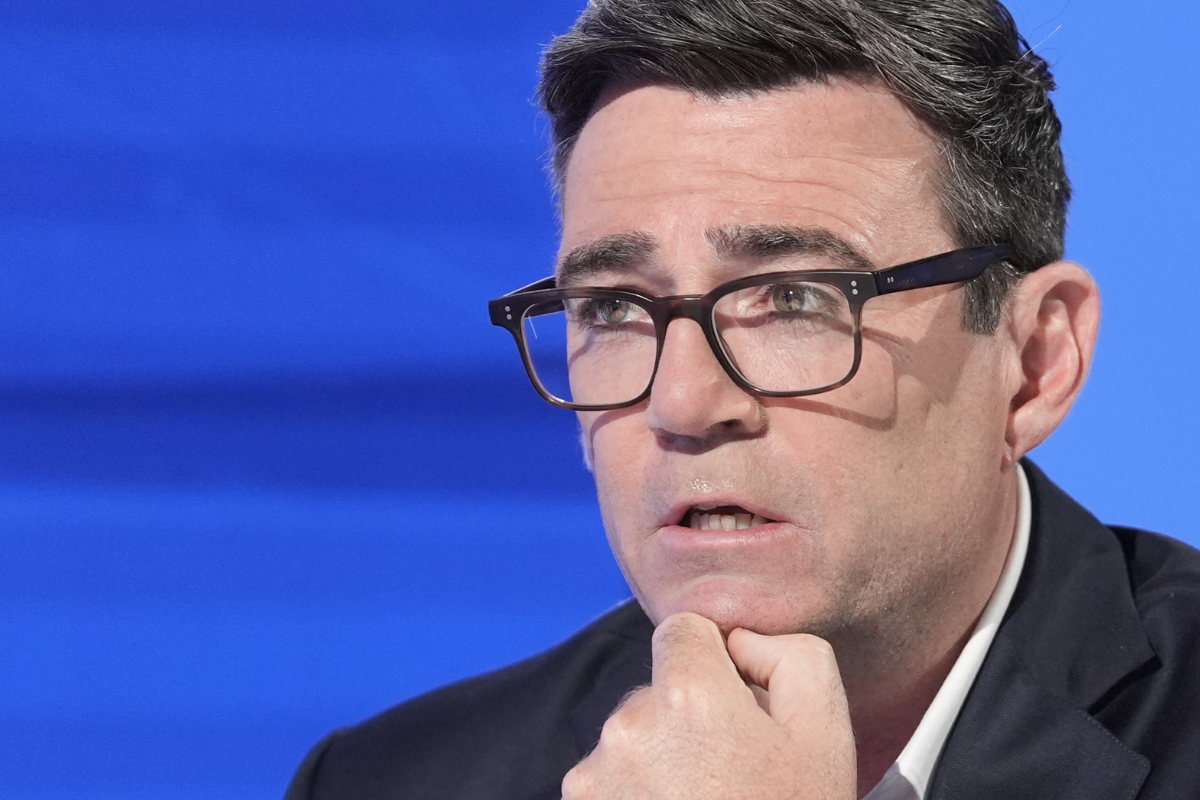
Credit: Image: PA
Introduction
The appointment of Andy Burnham as Prime Minister marks a significant political transition in the United Kingdom. Leadership changes inevitably generate questions regarding the future direction of foreign policy, particularly at a time when Europe faces ongoing security challenges arising from the war in Ukraine, increasing strategic competition between the United States and China, and continued instability across the Middle East. Of particular interest is whether the new government will alter Britain's longstanding relationship with Israel or whether any changes will be confined primarily to diplomatic language rather than strategic policy.
This article argues that Burnham's government is likely to maintain the fundamental principles of British foreign policy while adopting a more values-oriented diplomatic approach. The United Kingdom's strategic interests, including NATO, the transatlantic alliance, intelligence cooperation and regional stability, remain largely unchanged. However, Burnham appears willing to place greater emphasis on international humanitarian law, multilateral diplomacy and humanitarian concerns, particularly regarding the conflict in Gaza. Consequently, the change represents an evolution in diplomatic tone rather than a fundamental reorientation of British foreign policy.
The Enduring Foundations of British Foreign Policy
British foreign policy has traditionally demonstrated remarkable continuity regardless of changes in government. Since the Second World War, successive Conservative and Labour administrations have maintained several consistent strategic priorities.
First, the United Kingdom has remained firmly committed to NATO as the cornerstone of European collective defence. The Russian invasion of Ukraine reinforced Britain's commitment to strengthening NATO capabilities and supporting European security (NATO, 2025).
Second, the United Kingdom continues to regard its relationship with the United States as its most important bilateral partnership. Intelligence cooperation through the Five Eyes alliance, joint military operations and coordinated diplomatic initiatives remain central to British national security.
Third, Britain has consistently sought to maintain influence through multilateral institutions, including the United Nations, the G7 and wider international organisations. Although Brexit altered Britain's relationship with the European Union, cooperation with European allies on defence, sanctions and security continues to be regarded as essential.
These enduring priorities suggest that any new Prime Minister operates within well-established strategic constraints. Governments may alter emphasis or rhetoric, but Britain's broader national interests remain relatively stable.
Burnham's Emerging Foreign Policy
Early statements by Prime Minister Burnham suggest that his administration intends to maintain continuity in Britain's principal security commitments while introducing greater emphasis on humanitarian diplomacy and international law.
Support for Ukraine remains unchanged, with continued military assistance viewed as essential to maintaining European security and deterring further Russian aggression. Similarly, Burnham has reaffirmed Britain's commitment to NATO and continued cooperation with European allies.
However, his administration appears to favour a more active role in promoting international humanitarian principles. Rather than relying primarily upon military deterrence and strategic competition, Burnham has emphasised diplomacy, multilateral engagement and adherence to international legal frameworks as complementary instruments of British foreign policy.
This approach reflects Labor's traditional preference for combining national security with international norms rather than viewing the two as competing objectives.
Britain and Israel: Continuity with Greater Diplomatic Pressure
The greatest area of anticipated change concerns Britain's relationship with Israel.
Historically, the United Kingdom has maintained strong diplomatic, intelligence and security cooperation with Israel. Successive governments have recognised Israel's right to exist and defend itself while simultaneously supporting the establishment of an independent Palestinian state through a negotiated two-state solution.
Burnham has not challenged these longstanding positions. Britain continues to recognise Hamas as a terrorist organisation and accepts Israel's legitimate security concerns following attacks against its civilian population.
Nevertheless, Burnham has signalled that his government is prepared to adopt a more critical public position regarding the conduct of Israeli military operations in Gaza. Particular attention has been given to civilian casualties, humanitarian access and the application of international humanitarian law.
This represents an important distinction. Burnham's criticism appears directed primarily towards the policies of the current Israeli government rather than towards Israel's legitimacy or its right to defend itself. Britain therefore remains committed to Israel's long-term security while demonstrating a greater willingness to express public disagreement over specific military operations.
The likely consequence is increased diplomatic pressure rather than any significant reduction in intelligence sharing, defence cooperation or broader strategic partnership.
A Realist Interpretation
From a Realist perspective, Britain's foreign policy is unlikely to undergo significant strategic change.
Realist theory argues that states primarily pursue national interests, security and the balance of power rather than moral objectives (Waltz, 1979; Mearsheimer, 2001). Under this interpretation, Britain's relationship with Israel is driven principally by strategic considerations.
Israel remains an important intelligence partner in counter-terrorism, cyber security and Middle Eastern regional security. Cooperation between British and Israeli intelligence agencies contributes to monitoring extremist organisations, preventing terrorist attacks and understanding regional military developments.
Furthermore, Britain's close relationship with the United States creates additional incentives to maintain constructive relations with Israel. Since Washington continues to regard Israel as one of its principal regional allies, any substantial deterioration in UK-Israel relations would potentially complicate broader Anglo-American strategic cooperation.
Realists would therefore predict that despite more critical rhetoric, Britain's underlying strategic behaviour will remain largely unchanged because national interests continue to dictate policy.
A Constructivist Interpretation
Constructivist theory offers a different explanation.
Constructivists argue that foreign policy is shaped not only by material interests but also by identities, norms and shared understandings (Wendt, 1999). Governments respond to changing public expectations, evolving international norms and domestic political identities.
Burnham's stronger emphasis on humanitarian concerns may therefore reflect broader changes in British political discourse. Public concern regarding civilian casualties in Gaza, increasing emphasis on human rights and greater attention to international humanitarian law have become increasingly influential within democratic societies.
From this perspective, Burnham's foreign policy is not simply a strategic calculation but also an attempt to reinforce Britain's identity as a state committed to international law and multilateral diplomacy.
Constructivism therefore explains why governments may alter diplomatic language while maintaining similar strategic relationships.
Strategic Continuity Beneath Diplomatic Change
When Realist and Constructivist perspectives are considered together, a more balanced assessment emerges.
Realism explains why Britain's strategic alliances, intelligence partnerships and defence commitments are unlikely to change significantly. Constructivism explains why diplomatic rhetoric, public criticism and humanitarian engagement may become considerably more prominent.
Rather than contradicting one another, these theoretical approaches suggest that Britain's foreign policy contains both enduring strategic interests and evolving normative commitments.
Consequently, Burnham's government is likely to pursue what may be described as strategic continuity combined with diplomatic evolution.
Conclusion
The arrival of Andy Burnham as Prime Minister does not appear to represent a fundamental transformation of British foreign policy. Britain's commitments to NATO, the United States, European security and Israel's long-term security remain firmly embedded within its strategic outlook.
Where meaningful change is likely to occur is in diplomatic style. Burnham appears prepared to place greater emphasis on humanitarian concerns, international law and multilateral diplomacy while maintaining Britain's existing security partnerships.
Regarding Israel, this suggests continued recognition of Israel's right to defend itself alongside increased public criticism of military actions that generate significant humanitarian consequences. Britain is therefore unlikely to abandon its strategic partnership with Israel; instead, it may seek to balance security cooperation with a more assertive defence of international legal norms.
Ultimately, the Burnham government illustrates an enduring characteristic of British foreign policy: while governments change, national interests remain remarkably consistent. Leadership may influence the language through which policy is articulated, but the strategic foundations of Britain's international relationships continue to demonstrate considerable continuity.
References
Burnham, A. (2026) Prime Minister's inaugural statement. London: Prime Minister's Office.
Mearsheimer, J.J. (2001) The Tragedy of Great Power Politics. New York: W.W. Norton.
NATO (2025) NATO's support for Ukraine. Brussels: NATO.
Reuters (2026) Andy Burnham becomes Britain's Prime Minister. 20 July.
Reuters (2026) UK Prime Minister outlines foreign policy priorities. July 2026.
Waltz, K.N. (1979) Theory of International Politics. Reading, MA: Addison-Wesley.
Wendt, A. (1999) Social Theory of International Politics. Cambridge: Cambridge University Press.