Why Hasn’t Iran Used Cyber Warfare During This Conflict?
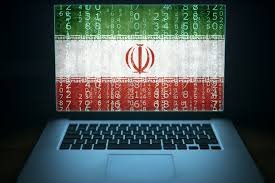
Aleksandar Malivuk/Shutterstock
A Realism Explanation
From a realist perspective, the apparent absence of large-scale Iranian cyber warfare in the current conflict is not an anomaly but a reflection of strategic calculation within an anarchic international system. Realism posits that states act rationally to preserve survival, maximize power, and avoid disproportionate retaliation (Waltz, 1979). Iran’s limited cyber engagement, therefore, reflects constraints imposed by deterrence, capability degradation, and escalation risk.
Cyber Capability and Pre-emptive Degradation
Realists emphasize material capability as the foundation of state behaviour. Iran’s cyber infrastructure, while sophisticated in asymmetric terms, remains vulnerable to technologically superior adversaries such as the United States and Israel. Pre-emptive cyber operations targeting Iranian command-and-control systems likely degraded operational effectiveness, reducing Iran’s ability to execute coordinated large-scale cyberattacks.
Waltz (1979, p. 97) argues that weaker states must operate within structural constraints, adapting strategies based on relative capabilities. Iran’s cyber restraint thus reflects not a lack of intent, but diminished operational capacity.
Deterrence and Fear of Escalation
Deterrence remains central to realist thought. Morgenthau (2006, p. 33) asserts that the credibility of retaliation is the cornerstone of international stability. A large-scale Iranian cyberattack on U.S. critical infrastructure—such as power grids or financial systems—would likely provoke overwhelming retaliation, potentially extending into conventional or kinetic domains.
Cyber escalation is particularly dangerous due to attribution ambiguity. Clarke and Knake (2010) warn that cyberattacks can escalate unpredictably, as states may respond based on perceived intent rather than confirmed evidence. Iran, aware of this dynamic, is incentivized to avoid crossing thresholds that would justify severe U.S. retaliation.
Cyber Weapons as Strategic Assets
Cyber capabilities are often described as “perishable weapons.” Once deployed, they are exposed, patched, and rendered ineffective (Lindsay, 2013). From a realist standpoint, Iran has an incentive to preserve its most advanced cyber tools for scenarios where their strategic value is maximized.
This aligns with Mearsheimer’s (2001) offensive realism, which emphasizes the accumulation and preservation of capabilities to ensure long-term survival. Iran’s restraint, therefore, reflects rational resource management rather than weakness.
Preference for Alternative Asymmetric Tools
Realism also predicts that states will employ the most effective tools available within their strategic environment. Iran’s reliance on missiles, proxy forces, and maritime disruption reflects a calculation that these tools offer more immediate and reliable coercive effects than cyber operations.
Cyberattacks, while disruptive, often produce uncertain outcomes and may fail to achieve decisive strategic objectives. In contrast, kinetic actions provide visible and measurable impacts, reinforcing deterrence credibility.
Conclusion
From a realist perspective, Iran’s limited use of cyber warfare is a rational response to structural constraints, deterrence dynamics, and strategic prioritization. Far from indicating incapacity, this restraint demonstrates calculated state behaviour aimed at preserving survival while avoiding catastrophic escalation.
References
Clarke, R. and Knake, R. (2010) Cyber War. New York: HarperCollins.
Lindsay, J. (2013) ‘Stuxnet and the Limits of Cyber Warfare’, Security Studies, 22(3), pp. 365–404.
Mearsheimer, J. (2001) The Tragedy of Great Power Politics. New York: Norton.
Morgenthau, H. (2006) Politics Among Nations. 7th edn. New York: McGraw-Hill.
Waltz, K. (1979) Theory of International Politics. Reading, MA: Addison-Wesley.
A Constructivism Explanation
Constructivism offers a fundamentally different explanation, emphasizing the role of identity, norms, and social meaning in shaping state behaviour. Iran’s cyber strategy cannot be understood solely through material capabilities; it must also be interpreted through its revolutionary identity and historical experience of marginalization.
Identity and Revolutionary Ideology
According to Wendt (1999, p. 231), state interests are shaped by identities constructed through social interaction. Iran’s self-perception as a revolutionary state resisting Western domination informs its strategic choices.
Cyber operations, in this context, serve not only as tools of disruption but also as instruments of symbolic resistance. Iran’s restraint from large-scale cyberattacks may reflect a desire to maintain moral legitimacy and avoid actions that could undermine its narrative of defensive resistance.
Norms and Legitimacy
Constructivists argue that international norms constrain state behaviour. Adler (1997, p. 322) highlights the structuring power of norms in shaping acceptable conduct. Iran may avoid catastrophic cyberattacks due to emerging norms against targeting civilian infrastructure.
Engaging in such attacks could reinforce its image as a “rogue state,” undermining its efforts to gain legitimacy within the international community.
Information Warfare and Narrative Construction
Rather than focusing on infrastructure disruption, Iran has emphasized information warfare. This includes propaganda, social media influence, and psychological operations designed to shape perceptions.
Weldes (1999) argues that threats are socially constructed through discourse. By engaging in narrative warfare, Iran seeks to redefine itself as a victim of aggression rather than an aggressor.
Misperception and Escalation
Constructivism also highlights the role of misperception in conflict escalation. Iran may avoid large-scale cyberattacks due to uncertainty about how its actions would be interpreted by adversaries.
As Hopf (2002) notes, identity-based interpretations can amplify conflict dynamics. A cyberattack intended as a limited signal could be perceived as an existential threat, triggering disproportionate retaliation.
Conclusion
Constructivism explains Iran’s cyber restraint as a product of identity, norms, and narrative strategy. Rather than indicating inactivity, Iran’s approach reflects a deliberate effort to shape perceptions and maintain legitimacy within a contested international environment.
References
Adler, E. (1997) ‘Seizing the Middle Ground’, European Journal of International Relations, 3(3), pp. 319–363.
Hopf, T. (2002) Social Construction of International Politics. Ithaca: Cornell University Press.
Weldes, J. (1999) Constructing National Interests. Minneapolis: University of Minnesota Press.
Wendt, A. (1999) Social Theory of International Politics. Cambridge: Cambridge University Press.